Strategic Design Implementation with Orchid 3D SVG Multilayer Cutting Files
In the evolving landscape of digital fabrication and creative entrepreneurship, the distinction between a simple craft project and a viable product line often lies in the quality of the underlying assets. The Orchid 3D SVG Multilayer Cutting Files represent more than just a decorative motif; they are a strategic tool for creators aiming to elevate their output from standard two-dimensional cuts to sophisticated, dimensional art. By leveraging this specific design, artisans, small business owners, and hobbyists can enhance their brand positioning through high-perceived-value home decor items that demand attention and convey technical proficiency.
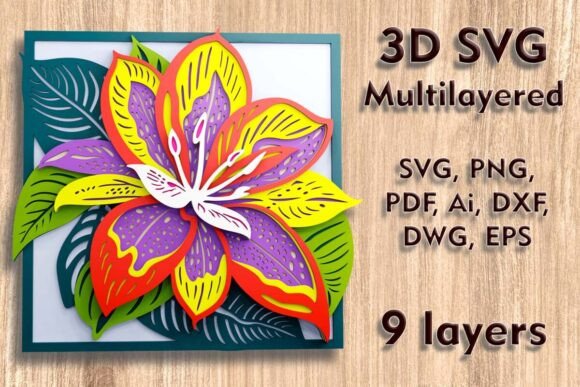
The core value proposition of the Orchid Mundala Svg lies in its structural complexity and versatility. Comprising nine separate layers, this design allows for a depth of field that single-layer cuts cannot achieve. When executed correctly, the interplay of shadows and physical depth creates a visual texture that transforms flat materials like plywood, paper, or acrylic into dynamic wall art. For professionals, understanding how to maximize the potential of these files is essential for maintaining a competitive edge in saturated markets such as Etsy, local craft fairs, or bespoke interior design services.
Technical Specifications and Material Strategy
To utilize the Orchid 3D SVG Multilayer Cutting Files effectively, one must first understand the technical constraints and opportunities provided by the file structure. The design is optimized for a base size of 250 mm in height by 270 mm in width (approximately 9.85 x 10.6 inches). This dimension is not arbitrary; it represents a sweet spot for desktop laser cutters and cutting plotters, balancing detail retention with material efficiency.
A critical strategic consideration is scalability. While the size is easily increased to create statement pieces for larger walls, reducing the design requires caution. The nine-layer structure includes thin elements that define the intricate floral patterns of the orchid. If the design is scaled down significantly without adjusting kerf settings or material thickness, these delicate bridges may break during the weeding or cutting process. Therefore, decision-makers must assess their target market’s preferred size before committing to production runs. If smaller items are required, it may be prudent to simplify the layer count or switch to thinner materials to preserve structural integrity.
The versatility of supported materials further expands the strategic application of this asset. The files are compatible with:
- Plywood and Wood: Ideal for high-end, rustic, or modern minimalist home decor. The natural grain adds organic warmth to the geometric precision of the orchid.
- Cardstock and Paper: Perfect for greeting cards, invitations, or lightweight shadow boxes. This lowers the cost per unit, allowing for higher margin sales in volume-based markets.
- MDF and Cardboard: Cost-effective options for prototyping or budget-friendly decor lines.
- Acrylic: Offers a contemporary, sleek aesthetic suitable for modern interiors or corporate gifts.
- Aluminum: For industrial-chic applications, though this requires specialized CNC or fiber laser capabilities.
By selecting the appropriate material, creators can tailor the Orchid 3D SVG Multilayer Cutting Files to different customer segments. A luxury buyer may prefer walnut plywood with a matte finish, while a younger demographic might appreciate vibrant acrylic layers. This adaptability allows businesses to diversify their product offerings without investing in new design resources.
Workflow Integration and File Compatibility
Efficiency in production is directly linked to the usability of digital assets. Upon purchase, users receive a comprehensive ZIP folder containing multiple file formats: SVG, layered SVG files, DXF, DWG, EPS, AI, PNG, and PDF. This breadth of compatibility ensures that the Orchid 3D SVG Multilayer Cutting Files can be integrated into virtually any workflow, regardless of the hardware or software ecosystem in use.
For users of Cricut or Silhouette machines, the layered SVG files are particularly valuable. They allow for automatic layer recognition, streamlining the setup process and reducing the risk of human error during alignment. Laser cutter users, such as those with Glowforge or industrial CNC routers, can leverage the DXF or DWG files for precise vector control. The inclusion of AI and EPS formats supports professional graphic designers who may wish to modify the design further or integrate it into larger branding compositions before cutting.
Strategic workflow planning involves pre-testing the layer alignment. With nine distinct layers, registration accuracy is paramount. A slight misalignment can disrupt the visual harmony of the orchid mandala. Professionals should establish a standardized jig or alignment protocol for their specific machine type. This operational consistency ensures that every unit produced meets quality standards, reinforcing brand reliability.
Market Positioning and Value Creation
The decision to incorporate Orchid 3D SVG Multilayer Cutting Files into a product line should be driven by clear business goals. This design is not merely a decorative element; it is a vehicle for communicating quality and craftsmanship. In a market flooded with generic vinyl decals and simple cutouts, 3D layered art stands out due to its tactile nature and visual complexity.
Consider the following strategic applications:
- Premium Home Decor: Position the finished orchid art as a high-ticket item. Use premium woods and framing techniques to justify a higher price point. The perceived value of multi-layered art is significantly higher than single-layer cuts.
- Customizable Gifts: Offer personalization options, such as adding names or dates on specific layers. The modular nature of the SVG allows for easy integration of text elements, enhancing the emotional connection for gift buyers.
- Corporate Branding: Adapt the color scheme of the layers to match corporate identities for office decor or client gifts. The neutral elegance of the orchid shape makes it suitable for professional environments.
- Educational Workshops: Use the design in crafting classes to teach layering techniques. The clear separation of files makes it an excellent teaching tool for beginners learning about depth and assembly.
By aligning the product with specific customer needs—whether aesthetic enhancement, gifting, or professional decor—creators can move beyond competing on price and instead compete on value and uniqueness.
Risk Management and Quality Control
While the potential for high-quality output is significant, there are risks associated with complex multilayer designs. The primary risk is production failure due to material inconsistency or machine calibration errors. Thin elements in the Orchid 3D SVG Multilayer Cutting Files are vulnerable to breakage if the material has knots (in wood) or weak fibers (in paper).
To mitigate these risks, implement a rigorous quality control process:
- Material Inspection: Always inspect sheets for defects before cutting. Reject materials with inconsistencies that could compromise the delicate layers.
- Test Cuts: Perform test cuts on scrap material to determine optimal power and speed settings. This is especially important when switching between materials like acrylic and plywood.
- Assembly Protocols: Develop a step-by-step assembly guide. Using spacers or foam tape between layers can enhance the 3D effect but requires precise application to maintain symmetry.
Furthermore, avoid the trap of overproduction. Without clear demand signals, creating large batches of intricate 3D art can lead to inventory stagnation. Adopt a made-to-order or limited-batch strategy to manage cash flow and reduce waste. This approach aligns production with actual market interest, ensuring that each piece created has a designated purpose or buyer.
Long-Term Strategic Value
Investing in high-quality assets like the Orchid 3D SVG Multilayer Cutting Files contributes to long-term brand equity. Consistently delivering complex, well-executed designs builds a reputation for excellence. Customers who appreciate the intricacy of a nine-layer orchid mandala are likely to return for future purchases, trusting the creator’s ability to deliver sophisticated products.
Moreover, mastering the technical challenges of multilayer cutting enhances overall operational capability. The skills developed in aligning, cutting, and assembling these files are transferable to other complex projects. This continuous improvement cycle fosters innovation, allowing creators to expand their portfolios with confidence.
In conclusion, the Orchid 3D SVG Multilayer Cutting Files offer a robust foundation for creative and commercial success. By approaching this asset with a strategic mindset—considering material selection, workflow efficiency, market positioning, and quality control—creators can unlock significant value. Whether used for personal enrichment or business growth, the key lies in intentional execution. Transform the digital file into a tangible masterpiece by respecting its complexity and leveraging its versatility, ensuring that every cut contributes to a broader vision of quality and craftsmanship.