Crafting Dimensional Art with Eagle and Flag Multilayer 3D SVG Files
In the evolving landscape of digital crafting, the transition from flat, two-dimensional designs to immersive three-dimensional artwork has opened new avenues for creativity. At the forefront of this movement are Eagle and Flag Multilayer 3D SVG Files, a sophisticated design resource that allows makers to produce striking wall decor, greeting cards, and gifts. This article explores the intricacies of these files, their technical specifications, material compatibility, and the practical considerations necessary to achieve professional-quality results.
Understanding the Design Architecture
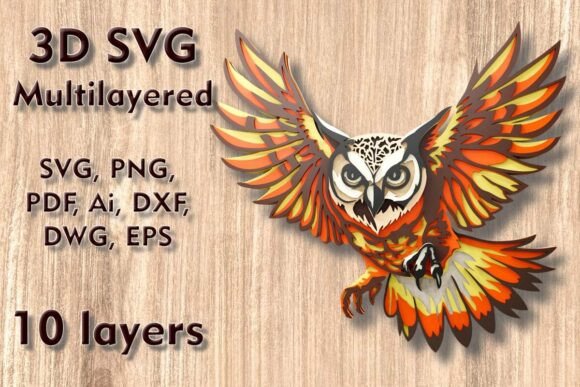
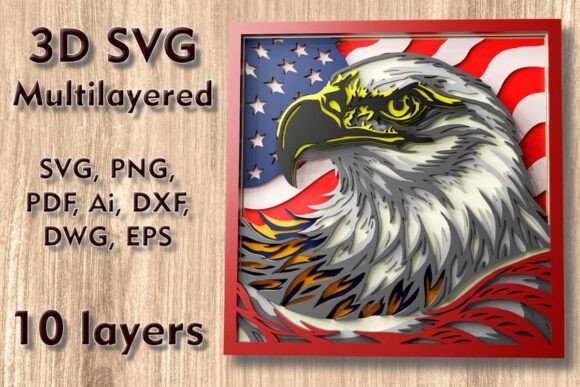
The core appeal of the Eagle and Flag 3D SVG Multilayer Cutting Files lies in their structural complexity. Unlike standard vector images intended for single-layer cutting or printing, this design is engineered as a composite of ten distinct layers. Each layer represents a specific depth plane, contributing to the overall illusion of volume and shadow when assembled. The subject matter—a majestic eagle paired with flag motifs—offers a patriotic and powerful aesthetic that resonates well in home decor markets.
The design is optimized for a square format, with initial dimensions set at 9.85 inches height by 9.85 inches width (approximately 250 mm x 250 mm). This size is not arbitrary; it provides a balanced canvas that is large enough to showcase intricate details while remaining manageable for most desktop cutting machines and laser cutters. However, one of the significant advantages of vector-based formats is scalability. Users can easily increase the size of the design to create larger statement pieces for living rooms or office spaces. Yet, caution is advised when reducing the scale. Because the design relies on thin elements to define feathers, stars, and stripes, shrinking the file too aggressively can result in parts that are too fragile to cut or assemble effectively.
Material Versatility and Compatibility
A defining characteristic of high-quality multilayer SVGs is their adaptability across various substrates. The Eagle and Flag Mundala Svg is designed to work with a broad spectrum of materials, allowing creators to tailor the final product’s look and feel to their specific vision. The recommended materials include:
- Plywood and Wood: Ideal for durable, rustic wall art. The natural grain adds texture to each layer, enhancing the 3D effect.
- MDF (Medium-Density Fiberboard): Provides a smooth, uniform surface that is excellent for painting or staining after assembly.
- Acrylic: Offers a modern, sleek appearance. Layered acrylic can create stunning translucent effects if different colors or opacities are used.
- Paper and Cardstock: Perfect for greeting cards, scrapbooking, or lightweight decorative panels. These materials allow for rapid prototyping and lower-cost production.
- Cardboard: An eco-friendly option for temporary displays or educational projects.
- Aluminum: For advanced users with CNC capabilities, metal sheets can produce industrial-chic decor.
The choice of material significantly influences the cutting parameters. For instance, cutting plywood requires a laser cutter or CNC router with sufficient power to penetrate the thickness of the wood, whereas cardstock can be easily handled by electronic cutting machines like Cricut or Silhouette. Understanding the interplay between material thickness and layer depth is crucial. If using thick materials like 3mm plywood, the offset between layers must be accounted for to ensure the stack does not become too bulky or unstable.
Technical Specifications and File Formats
Upon purchasing the Eagle and Flag Multilayer 3D SVG Files, users receive a comprehensive ZIP folder containing multiple file formats. This diversity ensures compatibility with virtually any design software or cutting hardware. The included formats are:
- SVG (Scalable Vector Graphics): The primary format for web-based design tools and many cutting machine software packages.
- Layered SVG: Specifically organized to preserve the separation of the ten layers, making importation into design software seamless.
- DXF and DWG: Standard formats for CAD software, essential for users operating CNC routers or industrial laser systems.
- EPS and AI: Compatible with Adobe Illustrator and other professional vector editing programs, allowing for further customization.
- PNG: A raster image useful for previewing the design or creating digital mockups.
- PDF: Useful for manual reference, printing templates, or sharing design previews with clients.
The inclusion of layered SVG files is particularly valuable. In many standard SVGs, all elements are grouped together, requiring the user to manually separate each layer—a time-consuming and error-prone process. With pre-layered files, the workflow is streamlined: import, assign cut settings for each material thickness, and proceed to cutting. This efficiency is vital for professionals managing high-volume orders or hobbyists looking to minimize setup time.
Machine Compatibility and Workflow
The versatility of the Eagle and Flag 3D SVG Multilayer Cutting Files extends to the machinery used to produce them. Whether you are a Cricut enthusiast, a Silhouette artist, or operate a Glowforge laser cutter, this design is accessible. However, the workflow differs slightly depending on the equipment.
For electronic cutting machines (like Cricut or Silhouette), the design is best suited for paper, cardstock, or thin vinyl. Users should ensure their machine’s blade is sharp and adjusted to the correct depth to prevent tearing delicate connections. Since these machines typically cut one sheet at a time, alignment marks or registration pins may be necessary to ensure perfect stacking of the ten layers.
For laser cutters and CNC routers, the design shines when used with wood, acrylic, or MDF. These machines offer higher precision and can handle thicker materials. When using a laser cutter, focus and power settings must be calibrated for each material type to achieve clean edges without excessive charring. CNC users should consider toolpath optimization to reduce cutting time and wear on bits, especially when working with harder materials like aluminum or dense hardwoods.
Practical Applications and Real-World Scenarios
The potential applications for the Eagle and Flag Mundala Svg are diverse, catering to both personal enjoyment and commercial ventures. Here are a few scenarios where this design excels:
- Home Wall Decor: Assembled from painted wood or stained plywood, the 3D eagle serves as a focal point in living rooms, entryways, or home offices. The layered depth creates shadows that change throughout the day, adding dynamic visual interest.
- Patriotic Gifts: During national holidays such as Independence Day or Veterans Day, these designs make thoughtful, handmade gifts. Using red, white, and blue cardstock or acrylic can enhance the thematic relevance.
- Commercial Signage: Small businesses, particularly those with a patriotic or American-themed brand identity, can use scaled-up versions of this design for lobby art or exterior signage.
- Educational Projects: Schools or community centers might use the paper version to teach principles of geometry, layering, and assembly in art classes.
Evaluating Suitability and Limitations
While the Eagle and Flag Multilayer 3D SVG Files offer immense creative potential, it is important to approach the project with realistic expectations. One limitation is the assembly process. Ten layers require precise alignment and adequate adhesive application. Beginners may find it challenging to achieve a perfectly symmetrical stack without practice. Using jigs or alignment tools can mitigate this issue.
Additionally, the complexity of the design means that cutting times can be lengthy, especially on slower machines or when using dense materials. Users should plan accordingly, allowing ample time for both cutting and assembly. Furthermore, as noted earlier, scaling down the design below its original 9.85 x 9.85-inch dimensions risks compromising the integrity of thin elements. It is generally safer to scale up than to scale down.
Another consideration is material cost. While paper and cardstock are inexpensive, high-quality plywood, acrylic, or aluminum can add up, particularly if mistakes occur during cutting. It is advisable to test cut a single layer on scrap material before committing to the full design.
Conclusion
The Eagle and Flag Multilayer 3D SVG Files represent a fusion of traditional craftsmanship and modern digital technology. By providing a ready-to-use, ten-layer design in multiple universal formats, this resource empowers creators to produce high-impact 3D art with relative ease. Whether you are crafting a heartfelt gift, decorating your home, or expanding your product line, understanding the nuances of material selection, machine compatibility, and assembly techniques will help you unlock the full potential of this design. With careful planning and attention to detail, the eagle and flag motif can be transformed from a digital file into a tangible masterpiece that celebrates both artistry and patriotism.