Integrating the 3D Gold Rose Gothic Rose Tumbler Wrap into Your Sublimation Workflow
In the competitive landscape of custom merchandise, visual impact is the primary driver of conversion. For creators and small business owners specializing in drinkware, the difference between a standard product and a premium offering often lies in the intricacy of the design asset. The 3d Gold Rose, Gothic Rose Tumbler Wrap represents a specific niche where aesthetic complexity meets technical precision. This digital asset is not merely a picture; it is a functional component of a manufacturing process that requires careful planning, compatibility checks, and quality control to yield a high-value physical product.
Understanding how to effectively integrate this design into your production pipeline involves more than just printing an image. It requires a grasp of sublimation mechanics, color management, and workflow efficiency. Whether you are a seasoned entrepreneur scaling your inventory or a hobbyist looking to refine your craft, treating digital assets as integral parts of your operational workflow ensures consistency and reduces waste.
The Role of High-Resolution Assets in Production Planning
Before any physical production begins, the selection of the right digital file sets the trajectory for the entire project. The Rose tumbler wrap design discussed here is engineered specifically for the 20 oz skinny tumbler market, a segment that remains highly popular due to its ergonomic shape and versatility. However, the success of the final product depends heavily on the source file’s specifications.
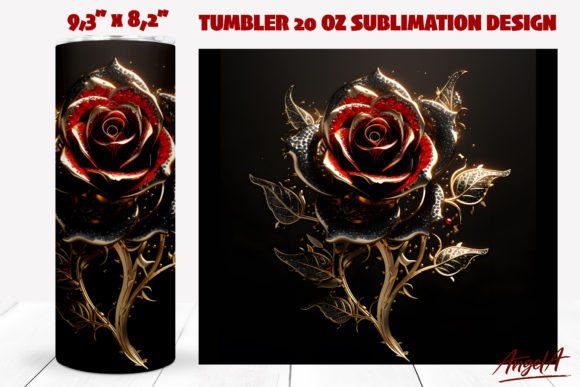
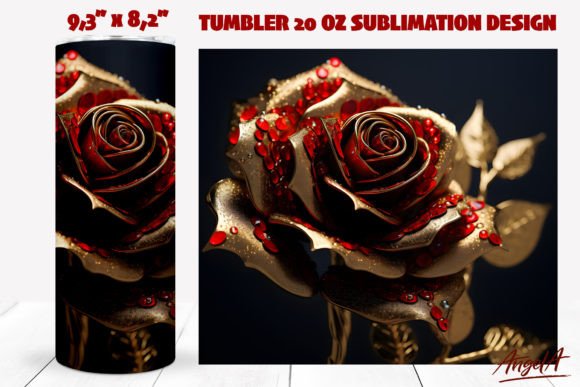
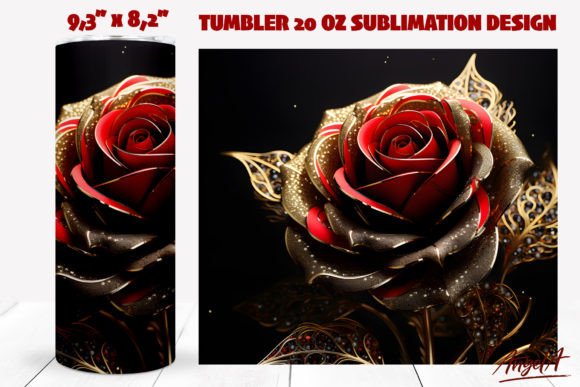
This particular asset is provided as a PNG file at 300 DPI (dots per inch), with dimensions of 9.3 by 8.2 inches. These technical details are critical for several reasons. First, the 300 DPI resolution ensures that the intricate details of the 3d red gold rose sublimation pattern remain sharp during the heat transfer process. Lower resolution files often result in pixelation or blurring, which degrades the perceived value of the item. Second, the specific dimensions align with the surface area of standard 20 oz skinny tumblers, minimizing the need for extensive resizing or cropping in graphic design software.
From a workflow perspective, starting with a correctly sized, high-resolution file eliminates several potential bottlenecks. It reduces the time spent on pre-press adjustments and mitigates the risk of print errors caused by upscaling low-quality images. By incorporating this ready-to-use asset into your digital library, you streamline the initial phase of your production cycle, allowing you to focus on execution rather than remediation.
Pre-Press Preparation and Compatibility Checks
Once the asset is acquired, the next phase involves preparing it for the sublimation process. This stage is where many creators encounter issues if they overlook the interaction between the digital design and their physical materials. The Gothic Rose Tumbler Wrap features complex gradients and metallic gold tones, which require precise color management to reproduce accurately.
To ensure optimal results, begin by verifying your color profile settings. Sublimation printers typically perform best with ICC profiles tailored to your specific ink and paper combination. Since the design includes 3d gold elements, it is essential to check how these tones translate from screen to print. Metallic effects in sublimation are achieved through specific color blends rather than actual metallic ink, so calibration is key to maintaining the luxurious appearance of the gold accents against the darker gothic background.
Additionally, consider the orientation of the design. The 9.3 by 8.2-inch layout is designed to wrap seamlessly around the cylindrical body of the tumbler. When importing the PNG into your design software, ensure that the aspect ratio is locked to prevent distortion. Distorted roses or misaligned patterns can significantly detract from the professional look of the final product. Use the mirror function if required by your specific sublimation paper or printer settings, although most modern workflows handle this automatically during the print dialog phase.
Execution: The Sublimation Process
The core of the workflow is the heat transfer itself. This is where the 3d Gold Rose, Gothic Rose Tumbler Wrap transitions from a digital file to a permanent fixture on the tumbler. Success in this phase relies on consistency in temperature, time, and pressure.
Start by securing the printed sublimation paper around the tumbler using heat-resistant tape. Ensure the paper is smooth and free of wrinkles, as any creases will result in white lines or blurred areas in the final design. Pay special attention to the seams where the edges of the wrap meet. For a seamless look, align the pattern carefully so that the gothic elements flow continuously around the circumference.
Use a convection oven or a specialized tumbler press, depending on your equipment availability. If using an oven, wrap the tumbler in butcher paper or a silicone sleeve to protect the element and ensure even heat distribution. Typical settings for polyester-coated tumblers range from 380°F to 400°F for approximately 180 to 200 seconds, but always refer to the manufacturer’s guidelines for your specific blanks. The 3d red gold rose design benefits from consistent heat to ensure the deeper reds and rich blacks saturate properly without burning the lighter gold highlights.
After the heating cycle, allow the tumbler to cool completely before removing the paper. Peeling the paper while hot can cause smudging or incomplete transfer, particularly in areas with heavy ink coverage like the gothic background. This cooling period is a crucial, often overlooked step in the quality control process.
Quality Control and Post-Production Handling
Once the tumbler is cooled and unwrapped, inspect the product for any defects. Look for banding, color shifts, or untransferred areas. The high contrast of the Gothic Rose Tumbler Wrap makes imperfections more visible, so rigorous inspection is necessary. A successful transfer should show vibrant reds, deep blacks, and shimmering gold tones without any graininess.
From a business workflow standpoint, document any variations in your output. If you notice consistent issues with the gold tones, it may indicate a need to adjust your printer’s color balance or change your sublimation paper brand. Keeping records of these adjustments helps refine your process over time, leading to greater efficiency and reduced material waste.
Finally, consider the packaging and presentation. A product featuring such a detailed and elegant design deserves packaging that reflects its quality. Clear sleeves or branded boxes can protect the tumbler during shipping and enhance the unboxing experience for customers. This final touch reinforces the perceived value of the 3d Gold Rose design and encourages repeat business.
Long-Term Integration and Scalability
Integrating the 3d Gold Rose, Gothic Rose Tumbler Wrap into your broader product line offers opportunities for scalability. Because the file is AI-generated and provided in a versatile PNG format, it can be adapted for other products with similar surface areas, such as water bottles or candle jars, with minor adjustments. This flexibility allows you to expand your inventory without investing in new design resources for every item.
Moreover, having a library of high-quality, ready-to-print assets reduces the time spent on creative development. This efficiency enables you to respond quickly to market trends and customer demands. Instead of spending days creating a new design, you can focus on marketing, customer service, and optimizing your production throughput.
In conclusion, the value of the 3d Gold Rose, Gothic Rose Tumbler Wrap extends beyond its visual appeal. It is a tool that, when used correctly, enhances workflow efficiency, ensures product consistency, and supports business growth. By paying attention to technical specifications, pre-press preparation, and quality control, you can leverage this asset to create premium products that stand out in a crowded marketplace. The key lies in treating the digital file not as an isolated element, but as an integral part of a well-oiled production machine.