Clown Horror Face Tumbler Wrap
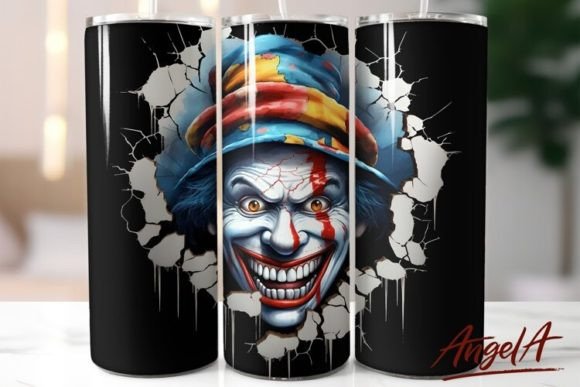
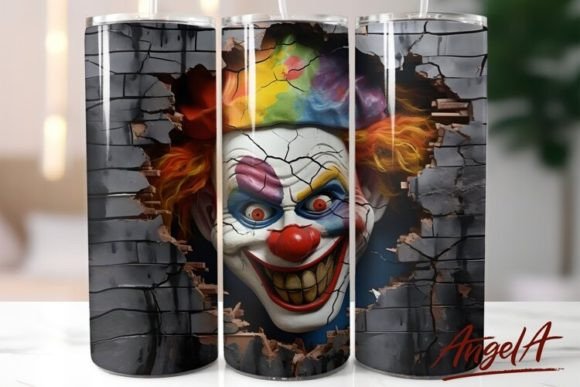
The intersection of digital design and physical craft has never been more vibrant, especially when it comes to seasonal customization. For creators looking to capitalize on the spooky season, the Horror Tumbler Wrap Clown Horror Face offers a striking visual narrative that goes beyond simple decoration. This specific design features a chilling clown visage emerging from a broken wall, rendered in high-definition 3D style. It is not merely an image; it is a textural experience translated onto a cylindrical canvas. With files provided at 300 DPI in PNG format, sized precisely at 9.3 by 8.2 inches, this asset is ready for immediate application in sublimation projects, offering a professional finish that resonates with the current demand for immersive Halloween aesthetics.
The Psychology of the Broken Wall Aesthetic
What makes this particular design compelling is its use of depth and disruption. Traditional flat designs often fail to capture attention in a saturated market. By incorporating the motif of a broken wall, the Horror Tumbler Wrap Clown Horror Face creates an illusion of three-dimensionality. The viewer perceives the clown not as a sticker on the surface, but as a entity breaking through the barrier of the tumbler itself. This technique leverages the psychological principle of violation of expectation. We expect a smooth, solid surface; the design contradicts this with jagged edges, debris, and a looming figure, creating immediate visual tension.
For designers and marketers, understanding this underlying mechanic is crucial. It is not just about placing a scary face on a cup. It is about curating an experience. The 3D rendering ensures that shadows and highlights align with the curvature of standard tumblers, enhancing the realism. When a user holds the tumbler, the perspective shifts, making the clown appear to move or lurk closer, depending on the angle. This dynamic quality increases the perceived value of the final product, transforming a everyday item into a conversation piece.
Technical Precision for Professional Results
Success in sublimation printing relies heavily on file quality and dimensional accuracy. The provided PNG files are optimized at 300 DPI, which is the industry standard for crisp, bleed-free printing. Lower resolution images often result in pixelation, particularly around complex details like the cracks in the wall or the intricate makeup of the clown. High DPI ensures that every shard of "brick" and every sinister smile line remains sharp after the heat press process.
The dimensions of 9.3 by 8.2 inches are calculated to fit most standard 20oz skinny tumblers with minimal waste. However, practical application requires attention to detail. Creators should always perform a test print on paper before committing to sublimation paper. This allows for checking color saturation and alignment. Since the design features dark tones and high contrast, ensuring your printer’s ink levels are optimal is vital. Black levels must be deep to maintain the horror atmosphere, while the highlights on the clown’s face need to pop against the darkness of the broken wall background.
- File Format: PNG with transparent or solid background options depending on printer preference.
- Resolution: 300 DPI for sharp, professional-grade output.
- Dimensions: 9.3 x 8.2 inches, tailored for standard tumbler wraps.
- Color Profile: Ensure CMYK conversion if required by your specific sublimation workflow to avoid color shifting.
Creative Applications Beyond the Tumbler
While the primary intent is tumbler wrapping, the versatility of this AI-generated artwork allows for broader creative exploration. Entrepreneurs and hobbyists can adapt the Horror Tumbler Wrap Clown Horror Face for various merchandise lines. The high-resolution nature of the file means it can be scaled down for smaller items without losing integrity. Consider applying this design to phone cases, where the vertical orientation of the broken wall fits naturally within the rectangular frame. It can also be used for laptop skins, providing a persistent, eerie aesthetic for tech enthusiasts who enjoy horror themes year-round.
For educators and workshop leaders, this design serves as an excellent case study in digital composition. You can use it to demonstrate how AI tools can generate complex textures like brickwork and fabric simultaneously. Students can learn about layering, masking, and the importance of lighting consistency in composite images. By analyzing how the light source affects the clown’s face relative to the broken wall, learners gain insights into realistic rendering techniques that apply to broader graphic design principles.
Marketing Strategies for Seasonal Sales
Small business owners can leverage this design to create urgency and exclusivity. Halloween is a peak season for personalized goods. Marketing this item not just as a tumbler, but as a "collectible horror artifact," can shift consumer perception. Use social media platforms to showcase the 3D effect through video content. Static images often fail to convey the depth of the broken wall illusion. Short clips rotating the tumbler under different lighting conditions can highlight the design’s intricacies, driving higher engagement and conversion rates.
Collaborations with local haunted houses or horror-themed events can also provide unique distribution channels. Offering custom-branded tumblers featuring the Clown Horror Face as part of a VIP ticket package adds tangible value to experiential purchases. This approach connects the digital design with real-world experiences, reinforcing brand recall and customer satisfaction.
Customization and Personalization Techniques
To keep results original and audience-friendly, consider offering customization options. While the base design is complete, adding personalized elements can increase appeal. For instance, allowing customers to add their names in a dripping, blood-red font at the bottom of the wrap can make the item feel bespoke. Ensure that any added text complements the existing color palette—sticks to whites, grays, and deep reds to maintain the cohesive horror theme.
Another variation involves background manipulation. If your editing skills allow, you can alter the color of the bricks in the broken wall to match specific team colors or brand identities, provided it does not detract from the horror element. A desaturated, grayscale version might appeal to those who prefer subtle horror, while a vibrant, neon-accented version could target a younger, rave-culture demographic. The key is consistency; any modification must respect the lighting and perspective established in the original AI generation.
- Analyze the Audience: Determine if your customers prefer realistic gore or stylized cartoon horror.
- Maintain Quality: Never upscale the image beyond its intended resolution without proper AI upscaling tools to prevent artifacts.
- Test Materials: Different tumbler coatings absorb ink differently. Test on both glossy and matte finishes to see which enhances the 3D effect.
- Package Thoughtfully: Present the final product in packaging that reflects the premium nature of the design, perhaps using black tissue paper or themed stickers.
Ensuring Consistency and Originality
In a market flooded with AI-generated content, standing out requires a human touch. The Horror Tumbler Wrap Clown Horror Face provides a strong foundation, but your curation and presentation define its value. Avoid simply dumping the design onto a product. Instead, contextualize it. Create lifestyle shots showing the tumbler in a dimly lit setting, perhaps next to old books or candlelight, to reinforce the narrative. This contextual marketing helps customers visualize the product in their own lives, increasing emotional connection and purchase likelihood.
Furthermore, stay informed about copyright and usage rights for AI-generated assets. Ensure that the platform where you sourced the design grants commercial usage rights. Transparency with your customers about the use of AI in your design process can also build trust, positioning you as a modern, tech-savvy creator who leverages new tools to deliver high-quality, innovative products. By combining technical precision with creative storytelling, you transform a simple PNG file into a successful, scalable business asset.